When is the best time to see the aurora / northern lights? There is no set TIME the aurora occurs; however, the scientists have observed when they seem to be the most active. Here in Alaska that is around Solar Midnight which is why all the tours you read about are set to not get you back to your hotel until well after 3 am. They can occur anytime; it is just around Solar Midnight they are the most active (Picture a scientist with a clipboard making a check mark when they saw it….and most of those tick marks are around Solar Midnight). As for dates – anytime between August 21 and April 21 when the northern skies are dark enough to see them and appreciate their brilliance.
Where is the best location to see the aurora / northern lights? The best location is directly under the Auroral Oval (where they originate in our hemisphere) and away from city lights. Coldfoot is in the center of the oval and Fairbanks is on the edge.
Is today good weather for the aurora? We appreciate why this is being asked; however, weather really does change rapidly in Alaska's Arctic. What the weather is at noon is not necessarily what it will be at midnight let alone in an hour from when one asks. The weather forecast is fluid and always changing.
What will the weather be like when I am traveling in Alaska? We can answer this in general terms (i.e. what the average temperature is) but if you are asking on Monday for the weather on Friday we don’t know. The forecast may show snow and sure enough when we get to Friday it is sunny…or, unfortunately it could be the opposite .. all week showing sun and then day of change to snow or partly cloudy.
Do I need to take a tour to see the Aurora / Northern Lights? No, you do not need to take a tour; however, you want to have a good idea where you are going so you don’t trespass on private property and you don’t disturb private residences with noise and lights late at night. Explore Fairbanks does have an Aurora Viewing Map & Guide you can look at online or pick up in person at the Morris Thompson Cultural and Visitors Center.
There are many advantages of going on a tour: having someone else know where to go and get you there safely, many provide hot beverages to keep you warm while you are waiting, and many offer you another activity while you wait. Our Arctic Circle Aurora Adventures are just that – engaging your mind and visual senses with a tour out into Alaska’s Arctic combined with the opportunity to look for the aurora away from the city lights. Other tours, we don’t offer, could be ice fishing while looking for the lights, take in a dog sled ride and look for the lights, or take a photography class and look for the lights.
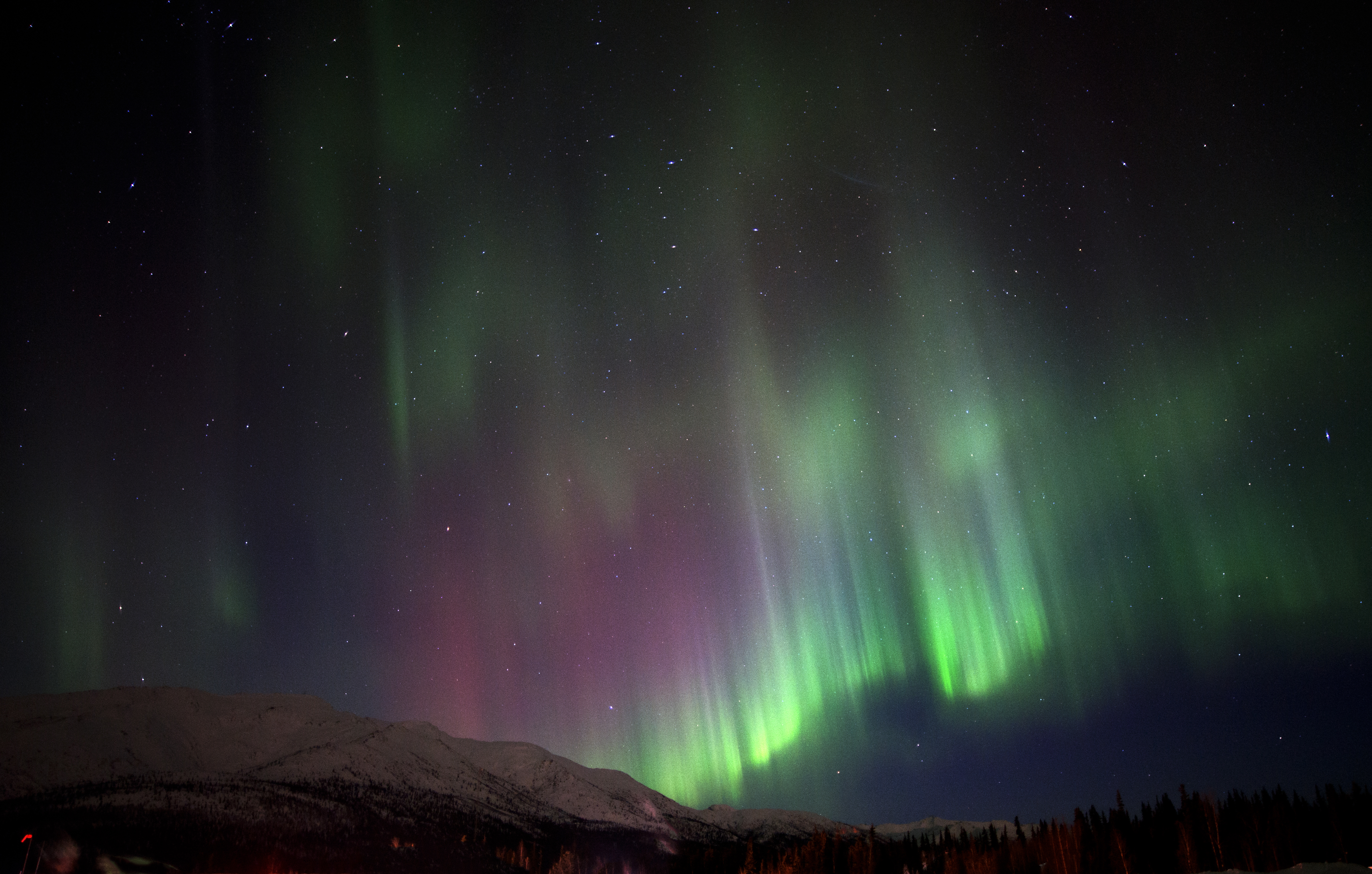
What is the aurora? One can get a university degree studying the aurora – We are going to keep it simpler than that. In very simple terms there are storms on the sun sending out electrically charged particles that get caught up in the solar wind and they enter the earth's atmosphere. As they enter the atmosphere, they hit the earth’s magnetic field and create the best light show on earth…well, in the atmosphere above earth. It is the electrons and protons from the sun colliding with the oxygen and nitrogen in the atmosphere that release energy in the form of light. This show of lights is happening around the magnetic poles of the northern and southern hemispheres along a line called the Auroral Oval.
Will I see them on the Arctic Circle WINTER Drive or the Arctic Circle WINTER Fly Drive Adventure – Southbound? The intent of both the Arctic Circle WINTER Drive and the Arctic Circle WINTER Fly Drive Adventure – Southbound is not to stay out later, longer to look for the lights. However, just like an amazing sun rise or sun set, if during the guided ground tour the guide sees the aurora and knows there is a safe place to stop off the highway they will make a stop for you to get out and take pictures. But, they will not stop to just wait and look to see if they will come out.
For those who are on the Arctic Circle AURORA Drive and the Arctic Circle AURORA Fly Drive Adventure –
Southbound you will meet a new guide around 11:30 pm at a place called the Arctic Circle Trading Post in Joy Alaska. There you will stay out later, longer with a guide who will continue sharing information about Alaska’s Arctic and who will keep them out later, longer during the most active time for the lights.
Should I avoid traveling during a full moon if I am looking for the aurora / northern lights? NO, if that is when you have to travel great. The full moon does not affect the aurora from occurring. You will get mixed answers even from professional photographers. The moon can light your foreground, brighten the trees, show people looking at the lights. If the time you can travel is a full moon don’t despair, get out and look for the lights!
Is there a set time for the aurora to appear and does it happen more than once a day/night? The aurora can take place anytime. However, the scientists have been able to make note they are most active around solar midnight in Alaska. Solar midnight is not 12:00 AM – it is that time when the sun is equidistant between dusk and dawn….so, roughly 1:30 AM -- changes depending on day light savings. Thus, if you are looking on your own or taking a tour you should plan on not returning to your hotel until well after 3:30 AM. The aurora can occur multiple times in one day and can last for a moment or longer than an hour.
Can I take pictures of the aurora with my phone? The quick answer is you can; however, just like using your camera you want to be familiar with how it works. Useful tools would be having a tripod to stabilize your phone/camera and back up power for your phone/camera as the cold will drain the batteries. We invite you to take a look at our helpful guide on Photographing the Aurora.
Why is Alaska’s Arctic a premier destination to look for the aurora? Why is it better than Norway, Iceland and the coast of Alaska? Location, location, location – statistically speaking Interior Alaska is protected from the Alaska Mountain Range to the south and the Brooks Mountain Range to the north resulting in more clear nights than you will find along a coast line where there is more moisture and precipitation. Can you see the aurora in those other locations, yes, but if your main, only, reason for traveling to a destination is to see the aurora then we encourage you to go to the place with the best odds. All of those other locations are absolutely worth it to travel to, but, not necessarily as premier aurora destinations.
Should I take the 11 year cycle into account when booking when I travel to Alaska to look for the Aurora? For those unaware, yes, there is an 11-year solar cycle that affects those areas AWAY from directly under the Auroral oval. The cycle refers to the number of sunspots on the sun’s surface. Again, this cycle does not affect the viewing of the aurora DIRECTLY UNDER the oval. It will, however, affect the chances of seeing the aurora at lower latitudes. So the farther one is away from the center of the oval the more you need to rely on both the Solar Maximum (the 11 year cycle) and the activity level of the aurora (wide band or narrow band).
Is there an app to alert me when/where to go out? NO, RESOUNDING NO. There are apps to let you know what the forecast is like. There are social media groups who will post pictures of what they saw or where they are and how the sky is looking. BUT YOU CANNOT count on receiving any notice in time for you to then go out and see the same thing. You need to go out and be out to look for the aurora. Know it is a late night activity – do not schedule an early morning activity after planning to stay out looking for the aurora
Tour Dates and Rates
Aurora Coldfoot Camp